

reel to reel audio tape restoration and digitising of Manchester Oi! band State Victims
Often the tapes we receive to digitise are ‘forgotten’ recordings. Buried under a pile of stuff in a dark, cold room, their owners think they are lost forever. Then, one day, a reel of the mysterious tape emerges from the shadows generating feelings of excitement and anticipation. What.. →
Open Source Solutions for Digital Preservation
In a technological world that is rapidly changing how can digital information remain accessible?
One answer to this question lies in the use of open source technologies. As a digital preservation strategy it makes little sense to use codecs owned by Mac or Windows to save data in the long term… →
Early digital tape recordings on PCM/ U-matic and Betamax video tape
→
Digital Optical Technology System – ‘A non-magnetic, 100 year, green solution for data storage.’
‘A non-magnetic, 100 year, green solution for data storage.’
This is the stuff of digital information managers’ dreams. No more worrying about active data management, file obsolescence or that escalating energy bill.
Imagine how simple life would be if there was a way.. →
Digital Records of the First World War
Across the world, 2014-2018 will be remembered for its commitment to remembrance. The events being remembered are, of course, those related to the First World War.
What is most intriguing about the centenary of the First World War is that it is already an occasion for growing reflection on.. →
Digital Preservation – Establishing Standards and Challenges for 2014
2014 will no doubt present a year of new challenges for those involved in digital preservation. A key issue remains the sustainability of digitisation practices within a world yet to establish firm standards and guidelines. Creating lasting procedures capable of working across varied and international.. →
End of year thank yous to our customers
What a year it has been in the life of Greatbear Analogue and Digital Media. As always the material customers have sent us to digitise has been fascinating and diverse, both in terms of the recordings themselves and the technical challenges presented in the transfer process. At the end of a busy.. →
Paul Roche recordings & preservation challenges with acetate reel-to-reel magnetic tape
We were recently sent a very interesting collection of recordings of the late poet, novelist and acclaimed translator Paul Roche. During his colourful and creative life Roche published two novels, O Pale Gallellean and Vessel of Dishonour, and several poetry collections, and brushed shoulders with.. →
Voice Letter – Analogue Reel-to-Reel Tape Transfer
What can the packaging of a tape object tell you?
Even before a tape is played back prior to transfer the packaging can tell you a lot about how and where it has been stored, and what it was used for.
Whether the boxes include sparse notation or are covered in stamps from countries across.. →
Big Data, Long Term Digital Information Management Strategies & the Future of (Cartridge) Tape
What is the most effective way to store and manage digital data in the long term? This is a question we have given considerable attention to on this blog. We have covered issues such as analogue obsolescence, digital sustainability and digital preservation policies. It seems that as a question it.. →
Digitising NAB radio broadcast cartridges
The NAB Cartridge (named after the National Association of Broadcasters) was a mainstay of radio broadcasting from the late 1950s-1990s. It was replaced by the mini disc and computerised broadcast automatons.
NAB Cartridges were used primarily for jingles, station identifications, commercials.. →
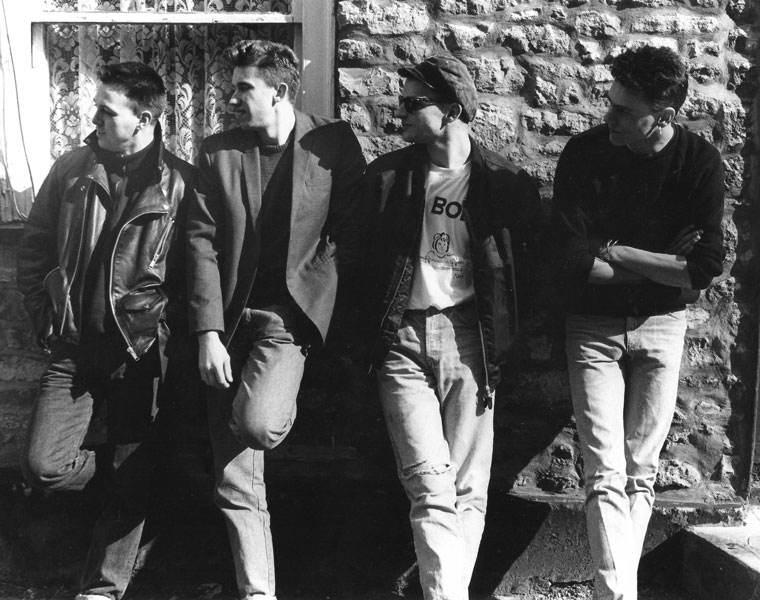
Digitising Shedding Magnetic Multi-track Tape & the history of John Peel favourites BOB
An important part of digitisation work we do is tape restoration. Often customers send us tape that have been stored in less than ideal conditions that are either too hot, cold or damp, which can lead to degradation.
In the excellent Council on Library and Information Sources’ report.. →
Jack Hollingshead’s lost Apple recordings on reel-to-reel tape
Digital technologies have helped to salvage all manner of ‘lost’ or ‘forgotten’ recordings. Whole record labels, from the recently featured Bristol Archive Records to institutional collections like Smithsonian Folkways, are based on the principle of making ‘hard to access’.. →
Transfer Digital Betacam (DigiBeta) to Quicktime or AVI now, one day they will be obsolete
Even relatively recent born-digital formats like Digital Betacam (or DigiBeta, as it’s often referred to) should be viewed as a potentially obsolete format. This Standard Definition (SD) format while very popular for many years is not the preferred delivery format now the industry has embraced.. →
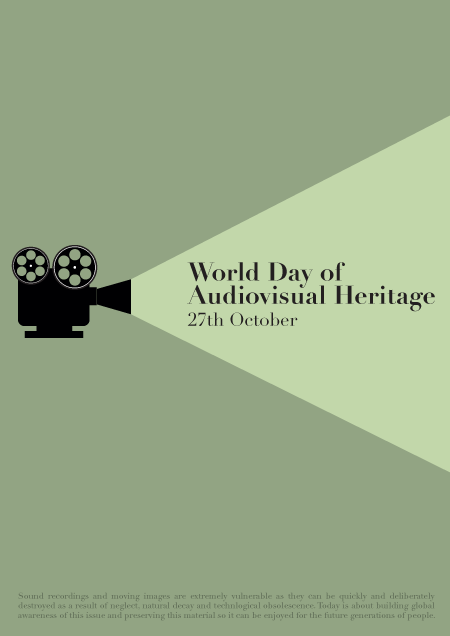
UNESCO World Audiovisual Heritage Day – 27 October
In 2005 UNESCO (United Nations Education, Scientific and Cultural Organisation) decided to commemorate 27 October as World Audiovisual Heritage Day. The theme for 2013 was ‘Saving Our Heritage for the Next Generation’. Even though we are a day late, we wanted to write a post to mark the.. →
Digital Preservation and Copyright
Most customers who send us tape to digitise own the copyright of their recording: it is material they have created themselves, be it music, spoken word or film.
Occasionally customers are not so sure if they own the full copyright to their recordings. This is because a single piece of work.. →
Digitise VHS Tapes – Bristol’s Meet Your Feet
We recently digitised some VHS tapes from when Bristol-based band Meet Your Feet performed on HTV in 1990. Meet Your Feet
‘formed in 1988 as a result of three of the women getting together to start a women’s music workshop, Meet Your Feet played its first gig in June 1988, when asked.. →
Parsimonious Preservation – (another) different approach to digital information management
We have been featuring various theories about digital information management on this blog in order to highlight some of the debates involved in this complex and evolving field.
To offer a different perspective to those that we have focused on so far, take a moment to consider the principles.. →
Bristol Archive Records – ¼ inch studio master tapes, ½ inch 8 track multi-track tapes, audio cassettes, DAT recordings and Betamax digital audio recordings
Bristol Archive Records is more than a record label. It releases music, books and through its website, documents the history of Bristol’s punk and reggae scenes from 1977 onwards. You can get lost for hours trawling through the scans of rare zines and photographs, profiles of record labels,.. →
1/2 inch EIAJ skipfield reel to reel videos transferred for Stephen Bell
We recently digitised a collection of 1/2 inch EIAJ skipfield reel to reel videos for Dr Stephen Bell, Lecturer in Computer Animation at Bournemouth University.
CLEWS SB 01 from Stephen Bell on Vimeo.
Stephen wrote about the piece:
‘The participatory art installation that.. →
7″ 8 track reel to reel tapes recorded on a Fostex A8
We were recently sent a collection of 7″ 8-track reel-to-reel tapes. All the 8-track tapes were recorded using Dolby C noise reduction on a Fostex A8 machine. They hadn’t been stored in optimum conditions and as many were recorded on AMPEX tape, we did need “bake” them prior.. →
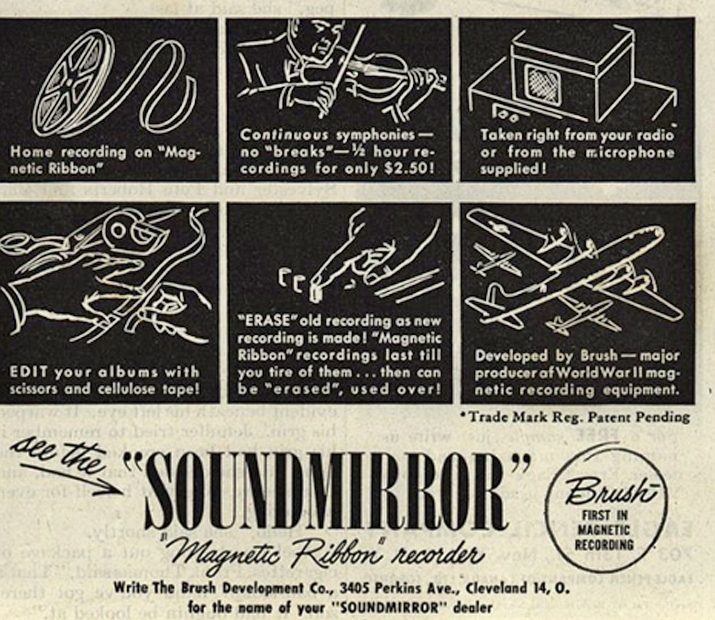
Paper-backed Soundmirror ‘magnetic ribbon’ – early domestic magnetic tape recorders
The oldest tape we have received at the Greatbear is a spool of paper backed magnetic tape, c.1948-1950. It’s pretty rare to be sent paper-backed tape, and we have been on a bit of adventure trying to find more about its history. On our trail we found a tale of war, economics, industry and invention.. →
A word about metadata and digital collections
Metadata is data about data. Maybe that sounds pretty boring, but archivists love it, and it is really important for digitisation work.
As mentioned in the previous post that focused on the British Library’s digital preservation strategies, as well as many other features on this blog,.. →
Digitisation strategies – back up, bit rot, decay and long term preservation
In a blog post a few weeks ago we reflected on several practical and ethical questions emerging from our digitisation work. To explore these issues further we decided to take an in-depth look at the British Library’s Digital Preservation Strategy 2013-2016 that was launched in March 2013… →
Remembering Ray Dolby pioneer of analogue noise reduction
We have already written about noise reduction this week, but did so without acknowledging the life of Ray Dolby, one of the inventors of video tape recording while working at Ampex and the inventor and founder of Dolby Noise Reduction, who died on 12 September 2013.
An obituary in The Guardian.. →
Audio Noise Reduction and Finn’s World War Two Stories
We get a range of tape and video recordings to digitise at the Great Bear. Our attention is captured daily by things which are often unusual, interesting and historically significant in their own way.
Last week we received a recording of Pilot Officer Edwin Aldridge ‘Finn’ Haddock talking.. →
Measuring signals – challenges for the digitisation of sound and video
In a 2012 report entitled ‘Preserving Sound and Moving Pictures’ for the Digital Preservation Coalition’s Technology Watch Report series, Richard Wright outlines the unique challenges involved in digitising audio and audiovisual material. ‘Preserving the quality of the digitized.. →
Magnetic Reel to Reel Tape and New Transfer Machines – Pictures from the Greatbear Studio
The Greatbear studio always has a wealth of interesting material in it, that somehow have survived the test of time.
From racks stacked full of obsolete audio and video tape machines, to the infinite varieties of reel-to-reel tape that were produced by companies such as Scotch, E.M.I. and Irish.. →
Curating Digital Information or What Do You With Your Archive?
Today is the first day of iPres 2013, the 10th international conference on the preservation of digital objects held in Lisbon, Portugal. To mark the occasion we want to reflect on an issue that is increasingly important for the long term management of digital data: curation.
Anyone who has.. →
The Magnetist – Audio Cassettes in Contemporary Culture
As lovers of magnetic tape and obsolete media, we keep our eyes open for people who remain attached to the formats most have forgot.
A recent film posted on Vimeo features the creative life of part time chef, noise musician and tape DJ Micke, also known as ‘The Magnetist’.
The.. →
C-120 Audio Cassette Transfer – the importance of high quality formats
In archiving, the simple truth is formats matter. If you want the best quality recording, that not only sounds good but has a strong chance of surviving over time, it needs to be recorded on an appropriate format.
Most of us, however, do not have specialised knowledge of recording technologies.. →
Greatbear Studio Visit – Archive for Mathematical Sciences and Philosophy
This week in the Greatbear Studio we are being visited by Michael Wright, Director of The Archive Trust for Research in Mathematical Sciences and Philosophy.
The Archive Trust for Research in Mathematical Sciences and Philosophy holds an extensive collection of audio and video recordings on.. →
How sustainable is digitisation?
Often when we think about the reasons to digitise magnetic tape collections we are considering the future. We digitise to make material accessible so it can be used again, or to preserve it so subsequent generations can benefit or learn from it. But how sustainable is digitisation and digital technology?.. →
Sony V62 EIAJ reel to reel video tape transfer for Barrie Hesketh
We have recently been sent a Sony V62 high density video tape by Barrie Hesketh. Barrie has had an active career in theatre and in 1966 he set up the Mull Little Theatre on the Isle of Mull off the West Coast of Scotland with his late wife Marianne Hesketh. Specialising in what Barrie calls the ‘imaginative.. →
What is the future of analogue media?
In a recent blog article on the Presto Centre website, Richard Wright argues that ‘the audiovisual collections of the 20th century were analogue, and we are now at a critical time for considering the digital future of that analogue content.’ He goes on to say, emphatically:
‘All.. →
Copying U-matic tape: digitise via dub connector or composite video?
Digitising legacy and obsolete video formats in essence is simple but the technical details make the process more complex. Experience and knowledge are therefore needed to make the most appropriate choices for the medium.
The U-matic video format usually had two types of video output, composite.. →
4 track 1/4 inch reel to reel tape recorded in mono – The Couriers Folk Club, Leicester
We were recently sent a ¼ inch tape by Ed Bates that included recordings from the Couriers Folk Club in Leicester, which ran from Autumn 1964 – June 1974.
The tape features performances from The Couriers (Jack Harris and Rex Brisland), George and Thadeus Kaye, Bill Pickering, Mark Newman.. →
Digital Preservation – Planning for the Long Term
There are plenty of reflections on the Great Bear tape blog about the fragility of digital data, and the need to think about digitisation as part of a wider process of data migration your information will need to make in its lifetime.
We have also explored how fast moving technological change.. →
‘Mysterious little reddish-brown ribbon’: BASF Magnetic Recording Tape
‘It seems we are living in an age in which practically every dream comes true. At no time in the past have so many scientific discoveries and inventions changed our way of life and the face of the world. Yes, we live in the age of science! Maybe we are forgetting to be awed, or are we so used.. →
Repairing obsolete media – remembering how to fix things
A recent news report on the BBC website about recycling and repairing ‘old’ technology resonates strongly with the work of Greatbear.
The story focused on the work of Restart Project, a charity organisation who are encouraging positive behavioural change by empowering people to.. →
Categories
- audio / video heritage (26)
- audio tape (123)
- digitisation expertise (20)
- video tape (108)
Popular Tags
access (9)
aesthetics (5)
analogue (54)
archive (49)
audio cassette (8)
BBC (7)
Bristol (9)
cassette (8)
cultural history (9)
DAT (9)
data migration (27)
digital (15)
digital archive (5)
digital video tape (5)
digitisation (72)
documentary (8)
EIAJ (7)
electronics (7)
encoding (7)
information management (25)
innovation (10)
lost tapes (12)
machine obsolescence (13)
machine repair (17)
memory (11)
metadata (8)
music (19)
obsolescence (12)
obsolete media (22)
personal archives (6)
preservation (11)
quarter inch tape (18)
reel to reel (30)
repair (5)
restoration (32)
standards (7)
sticky shed (13)
tape (25)
tape baking (12)
tape mould (10)
television and broadcast (5)
U-matic (17)
VHS (7)
video (26)
video art (9)